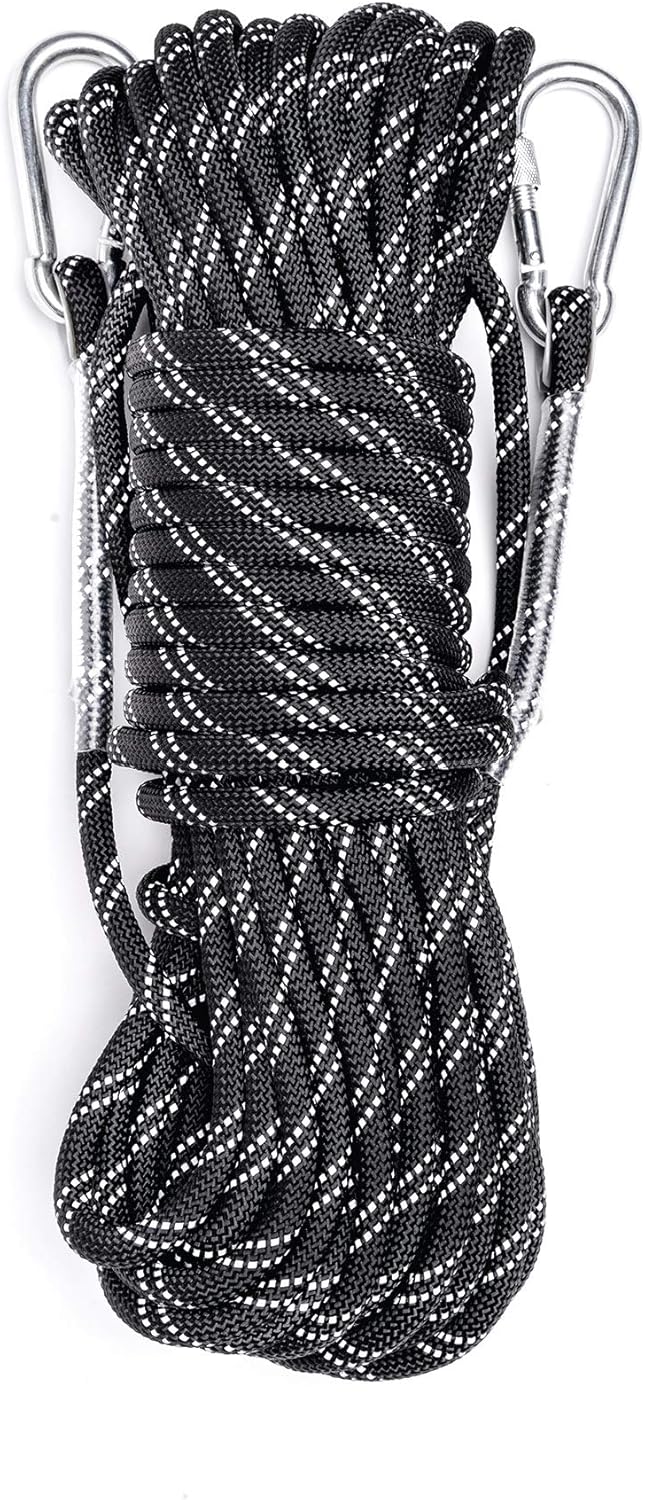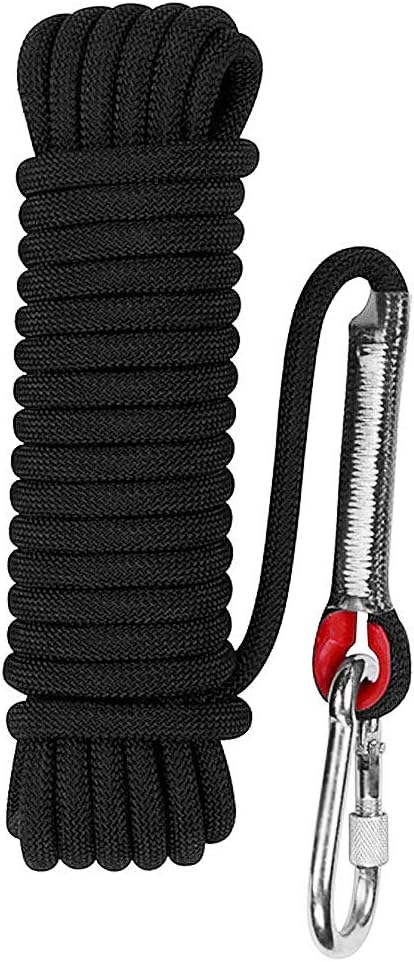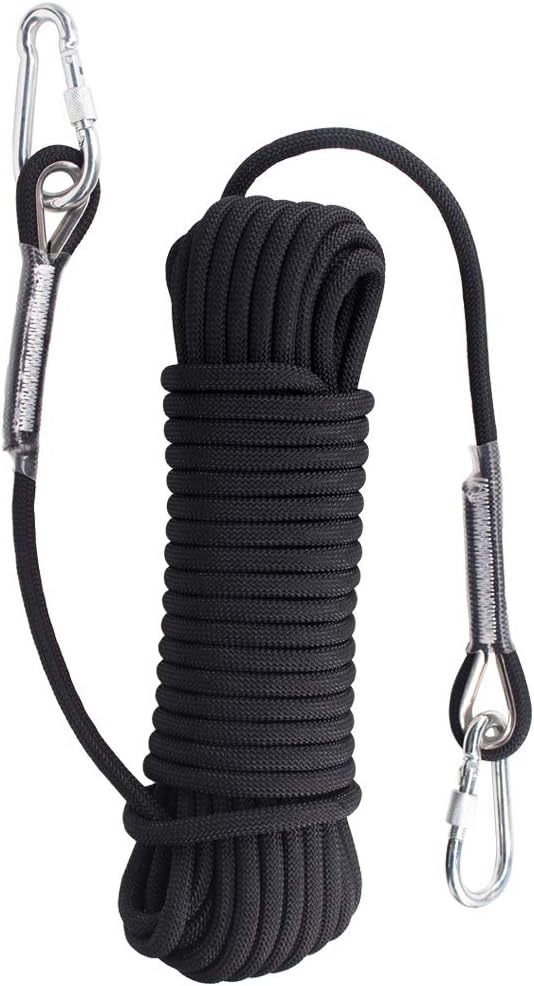

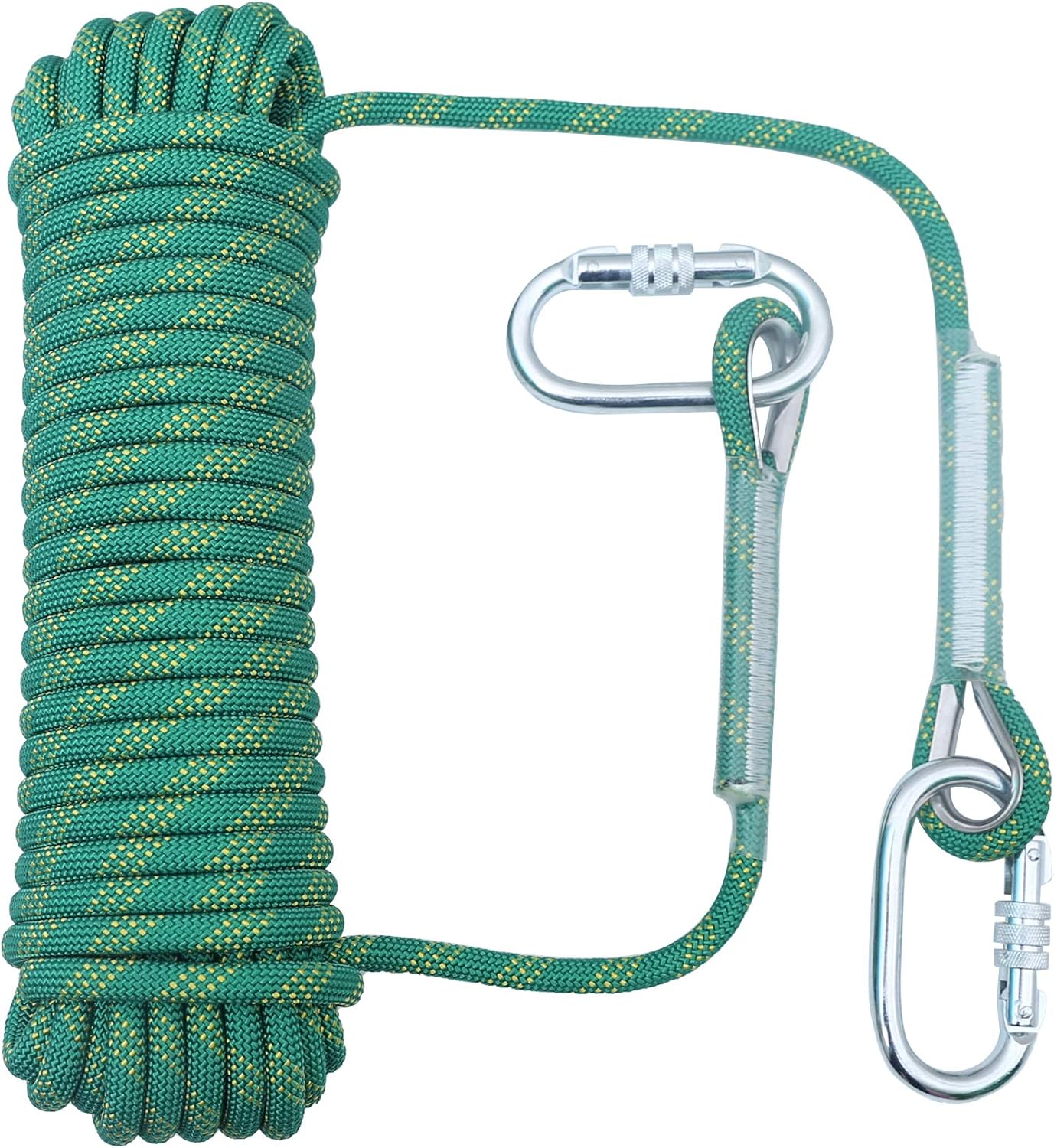



orgphys Rock Climbing Rope 10mm - 32 Feet Outdoor Safety High Strength Rappelling Rope for Hiking, Mountaineering, Training, Rescue, Fire Escape (Green) : Sports & Outdoors
Share on:
Description
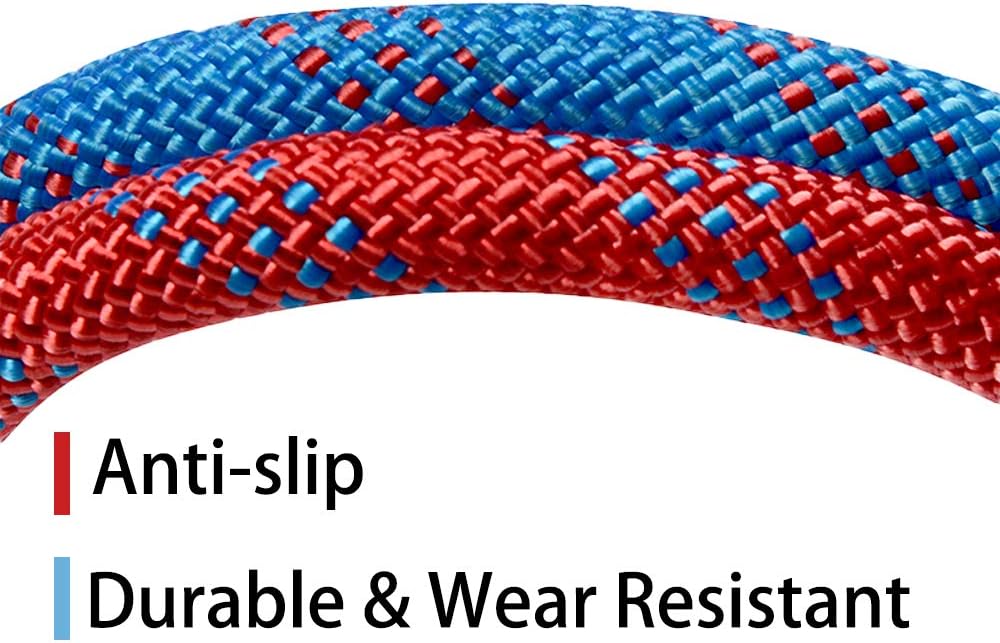
Resistant to dirt, clean, and has stronger abrasion resistance. The rope body is double-insured, and the inner core is made of polypropylene high-strength silk, which has strong tensile strength and improves the stability of the rope body. Large 10*10 solid iron hook, plastic wear-resistant sleeve, sewing buckle, wear-resistant pad sleeve on the jacket.The sewing buckle has strong tensile strength and is machine-sewn, which ensures safety. The rope end is covered with hemming, which can reduce the friction between the buckle and the rope. The rope adopts imported machines, tightly woven. It has clear lines, strong stranding force, and when the rope body is under strong stress, the rope body still not be loose. The rope is made with rigorous craftsmanship and the size is accurate to 10mm. Maintenance of climbing rope A climbing rope that suits you must be carefully selected and cared for. You must remember to take good care after mountaineering to better extend the life of the climbing rope. 1. Don't lend your own rope to others, and don't borrow others' rope, because you don't know the using record of this rope. You could record its use of each rope from the time you bought it, and make a simple summary after each use. For example: whether the surface is worn, whether it has been pulled through rough or sharp terrain etc. These records can make you clearly konw the status of the rope, also can be the unforgetable memery of your climbing. 2. When using the rope, try not to let it touch the ground. It is best to put it on a rope bag that can be completely flattened to reduce the chance of sand and gravel running into the rope. 3. Whether you wear socks or bare feet, do not step on the rope. Stepping on it will cause some sand particles to penetrate into the rope, and slowly cut the rope skin or core fiber by using. There may be no scratches on the surface, but the fibers inside may have been cut. 4. Try to avoid pulling the rope through rough or sharp terrain. Climbing in wet or icy places (such as river upstream or icy climbing) should use waterproof treated rope. The strength of the wet rope is reduced and the wear is fast. 5. Check the rope after each use, clean it regularly, and place it in a cool and ventilated place to dry naturally Just take care of your rope, and enjoy every climbing!
Product Overview
We Recommend

Black Diamond 9.9 Mm Climbing Rope: Sports & Outdoors
$99.00 - $184.95


Aoneky Gym Climbing Rope : Sports & Outdoors
$29.99 - $79.99