


SunGrow Finch Coconut Fiber, 1.5 oz, Loose Bedding Substrate for Birds Nest Cages, Nesting Material for Budgie Hummingbird Canary Parakeet : Pet Supplies
Share on:
Description
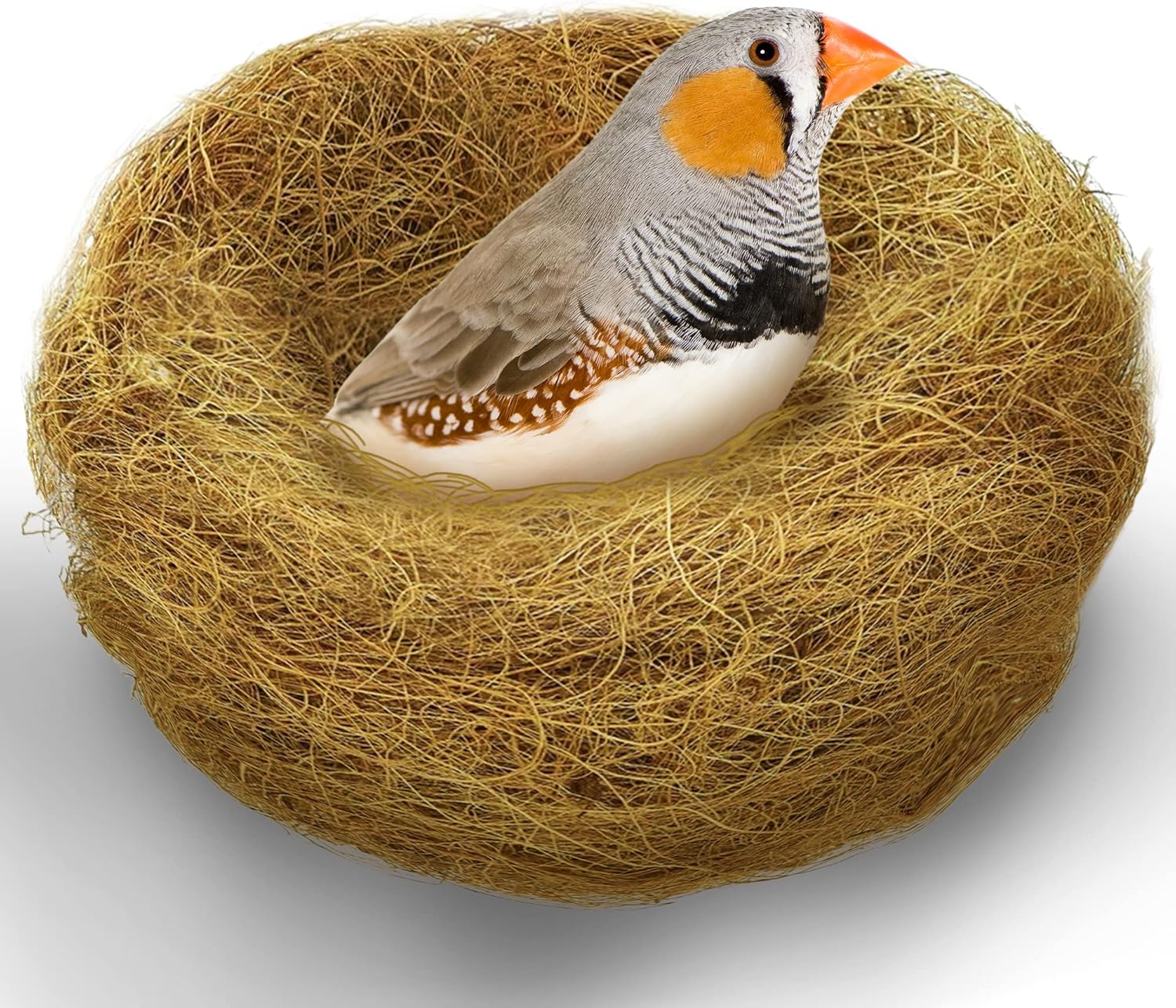
Often, the outer layers are of coarse material, and the inside is lined with softer or finer material. When? Spring is the start of the breeding season for most of our North American birds. They pair up with mates, build nests, lay eggs, raise young, and then some of them repeat the cycle — as many as three times. Purpose of Nesting Material The term "nesting material" refers to anything that birds may use to construct a nest. Whether they create a simple depression of sticks and straw or if they have a more elaborate nest structure with intricate architecture, all birds need good materials for their nests. Regardless of the nest size or shape, the nesting material serves several purposes: Cushioning eggs from the ground and parents' weight Insulating eggs from temperature changes Holding the clutch together for heat efficiency Camouflaging the nest from predator Protecting the nest from the elements Why Coco Fiber? Coconut fibre is popular as a structural material as it curls nicely. Great for nesting, bedding, plucking, and burrowing. The coconut fibers are used to make coconut coir nests. Coir fibers are categorized in two ways. When coconut fiber is extracted from matured coconuts, they are known as brown fiber. They are naturally brown in color having a strong and thick nature and can withstand abrasion well. When coconut fiber is extracted from immature coconuts. They are naturally white in color having smooth and fine soft touch properties and it is also weaker than the brown fiber. This fiber is called white fiber. The brown fiber is used to make nest. Do's: Do provide nesting material in any of the following ways: in piles on the ground (works well for leaves and twigs) in wire-mesh suet cages, or in mesh bags hung on tree trunks, fence posts, or railings pushed into tree crevices draped over vegetation in open-topped berry baskets spiral wire hangers made especially for putting out nest material (one type looks like an oversized honey-dipper) Don'ts When offering string, twine or thread, cut the nesting material into segments no more than 3-6 inches long. Shorter lengths will not be as attractive, while longer lengths can potentially strangle both adult birds and nestlings or cause injuries to legs and wings if the birds get tangled. Do not offer any plastic or nylon material, including fishing line. These materials can be deadly to the birds and are frequently responsible for bird injuries. For fibers, raw cotton and wool are preferred to synthetics. While nesting material can get wet easily, birds may be more attracted to sources of dry material. Place the nesting material in a sheltered but visible location for the best results. Points to Remember Cut them into one-inch-wide strips and in lengths under 6 inches long, and put them where birds will find them, such as on tree and shrub branches. Don’t use synthetic fibers or long lengths, which, like hair, can tangle and injure birds Leave bales of this SunGrow coconut fiber in your bird's’ cage and watch as they use it to create their own little nest. The coconut fiber is a wonderful alternative to synthetic fibers as it is raw. Blue tits, finches and budgies will find this material perfect for nest building. These coconut fibers are also perfect for adding to your small furry friend’s hutches. Rabbits, gerbils, hamsters and guinea pigs will find it cozy and comfortable for burying their little paws into and settling down for a nice sleep. It also provides great insulation for rabbit hutches and other cages. Your pets will also enjoy using this to dig and hideout in. Hiding treats inside the bales of coconut fiber is a great way to interact with your pets; watch as they scurry through the fibers in search of their treats. The SunGrow coconut fiber is very beneficial for your pets. Regular sawdust and woodchips which are widely used in pet cages can actually cause potential malady and affect the rabbit’s respiratory system. The coconut fibers are much safer and healthier for your pet. The fibers are also absorbent and your pet won’t soak it though like other products. So now you can easily clean your pet's cage; as you will have no more soggy newspaper and stinky hay to get rid of. This package includes 1.5 oz of coconut fiber.
Product Overview
We Recommend