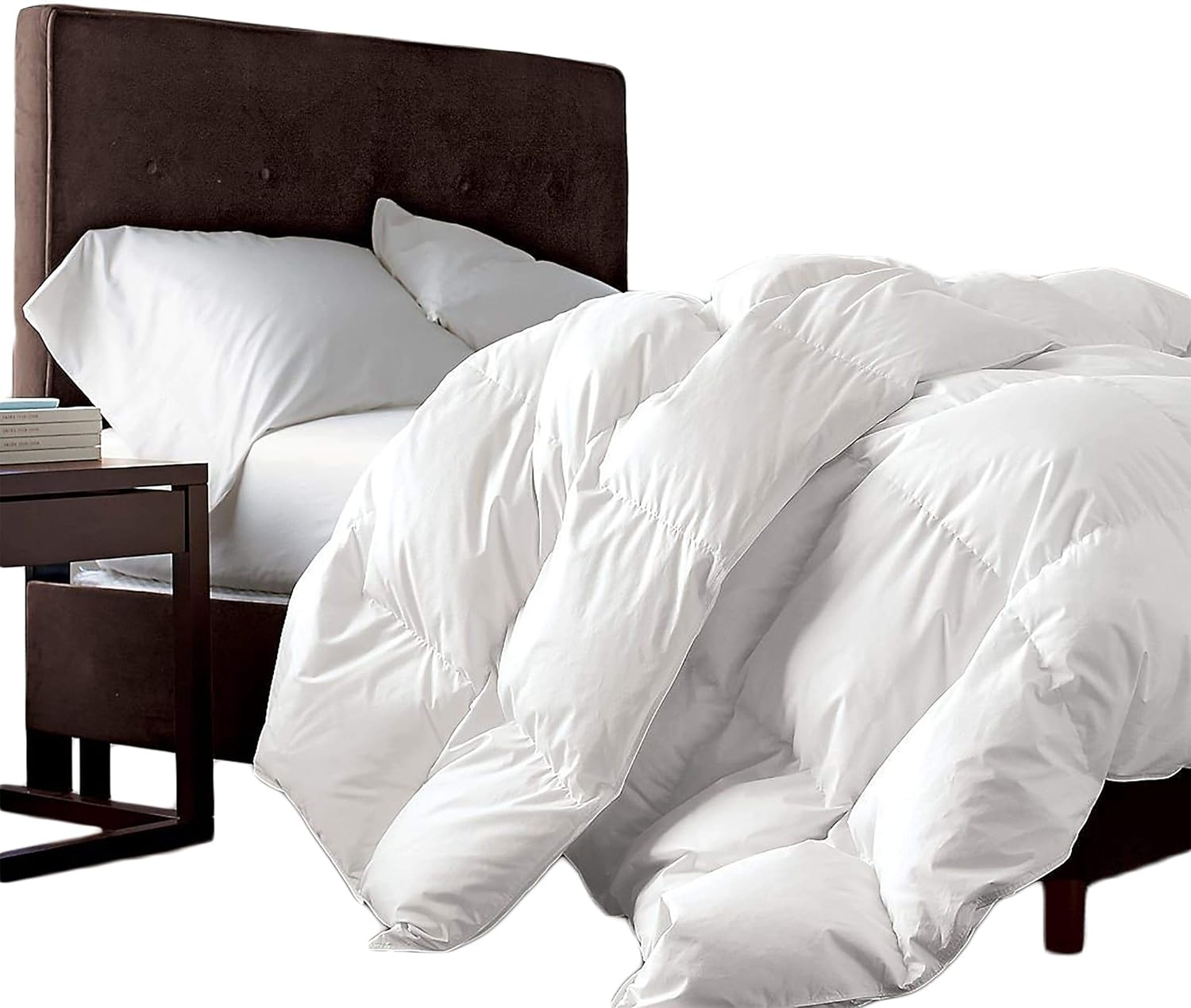
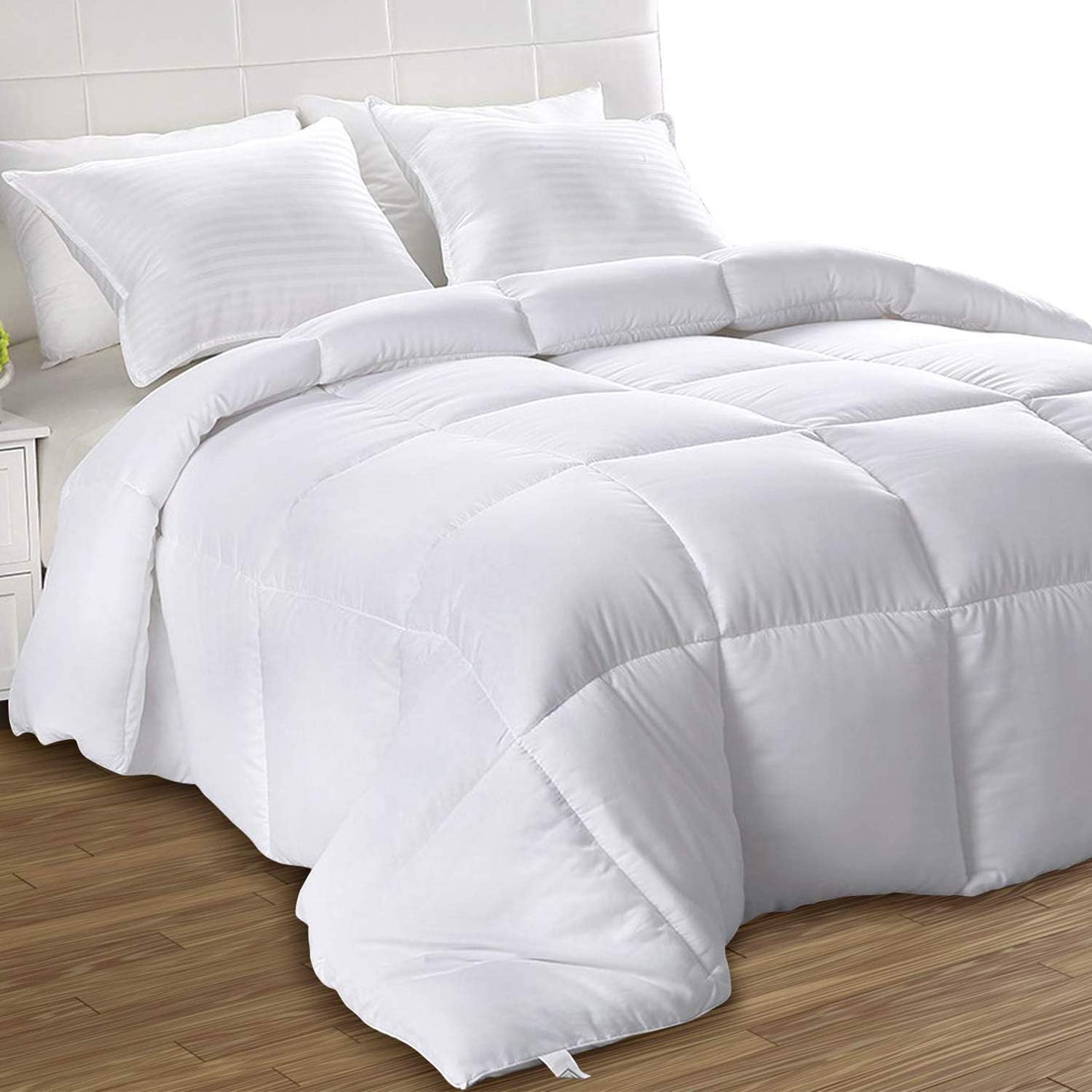
Canadian Down & Feather Co. - All Season White Goose Feather Duvet Comforter Twin Size - 233 TC Shell 100% Cotton - Oeko TEX Certified : Home & Kitchen
- Category: Duvets & Down Comforters
- Store: Canadian Down & Feather Company
Share on:
Description
This is a feather duvet! How does a feather duvet compare to a down duvet? There are 3 main differences: 1. Look and Feel of the fill: Feathers consist of a hard quill shaft with a series of fibers extending from each side. Down has no quill. It consists of clusters of light, fluffy filaments growing from a central point. 2. Loft: Down quality is measured by loft (AKA fill power). This measurement is not used for feather products. 3. Warmth & Weight: Down has excellent insulating properties, so down duvet are quite light. It doesn’t take much fill to provide a lot of warmth. Feather doesn’t have the same insulating properties, so feather duvets are heavier. It takes more feather to achieve the same amount of warmth. 4. Cost: Down is a scarcer, higher-performance material than feather, so it is far more expensive. Feather is more affordable! Thread count refers to the number of threads per square inch of fabric. It is important to have a minimum of 233 thread count to prevent down and feather leakage. There are different benefits to lower and higher thread counts. Lower thread counts are more durable and more affordable. They tend to make some rustling noise with movement. Higher thread counts are softer and quieter and come at a higher cost. Canadian Down & Feather Company has been IDS and RDS Certified since 2018. Regular audits are conducted to ensure animal and human welfare throughout the supply chain, traceability of raw materials, and accuracy of labeling and advertising. Canadian Down & Feather Company has been Carbonzero Certified since 2018. We measure and offset the carbon emissions generated by our facility To calculate the overall star rating and percentage breakdown by star, we don’t use a simple average. Instead, our system considers things like how recent a review is and if the reviewer bought the item on Amazon. It also analyzed reviews to verify trustworthiness.
Product Overview
We Recommend