


Excedrin Migraine 300 Coated Caplets: Health & Personal Care
- Category: Acetaminophen
- Store: Excedrin
Share on:
Description
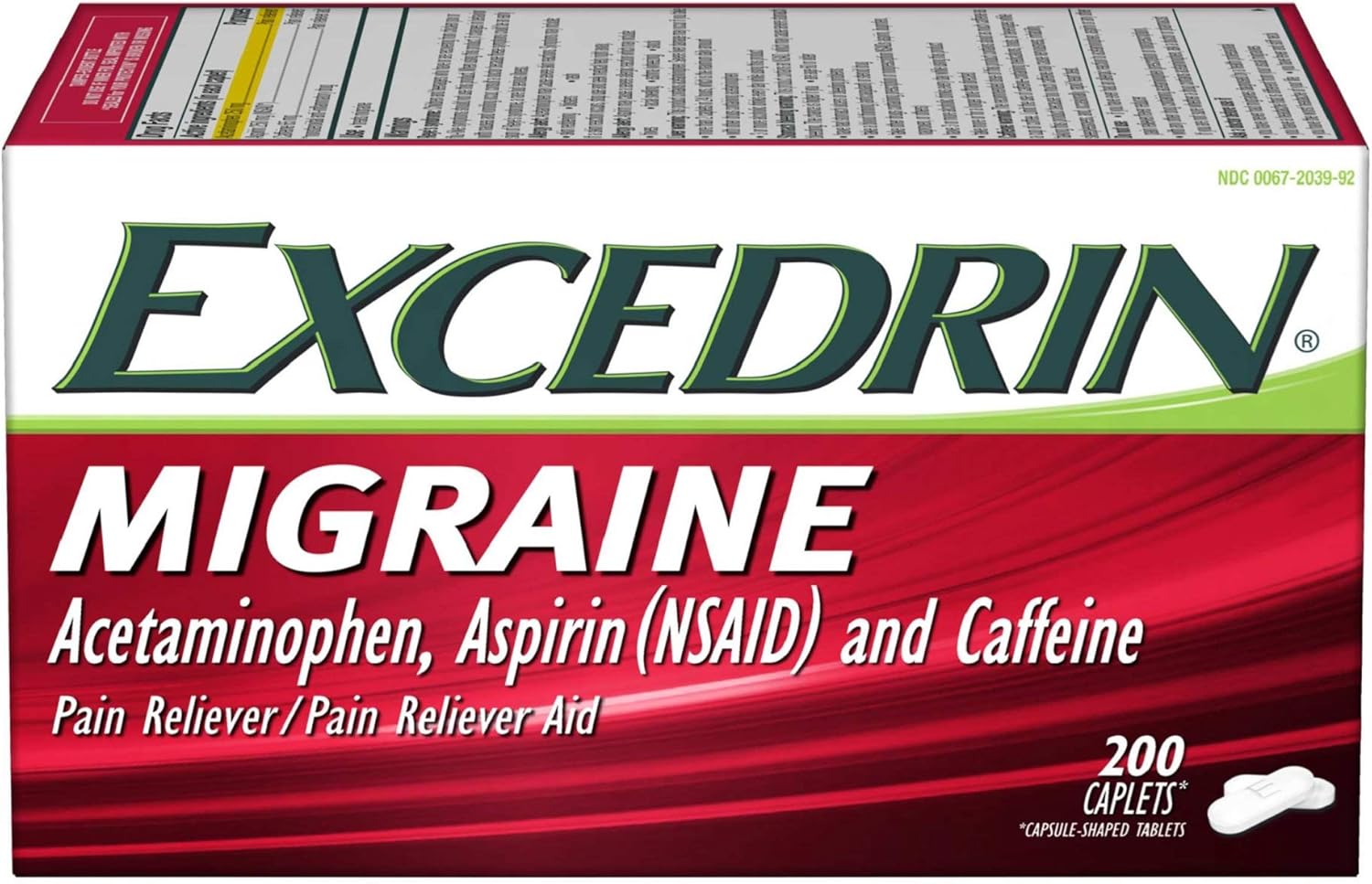
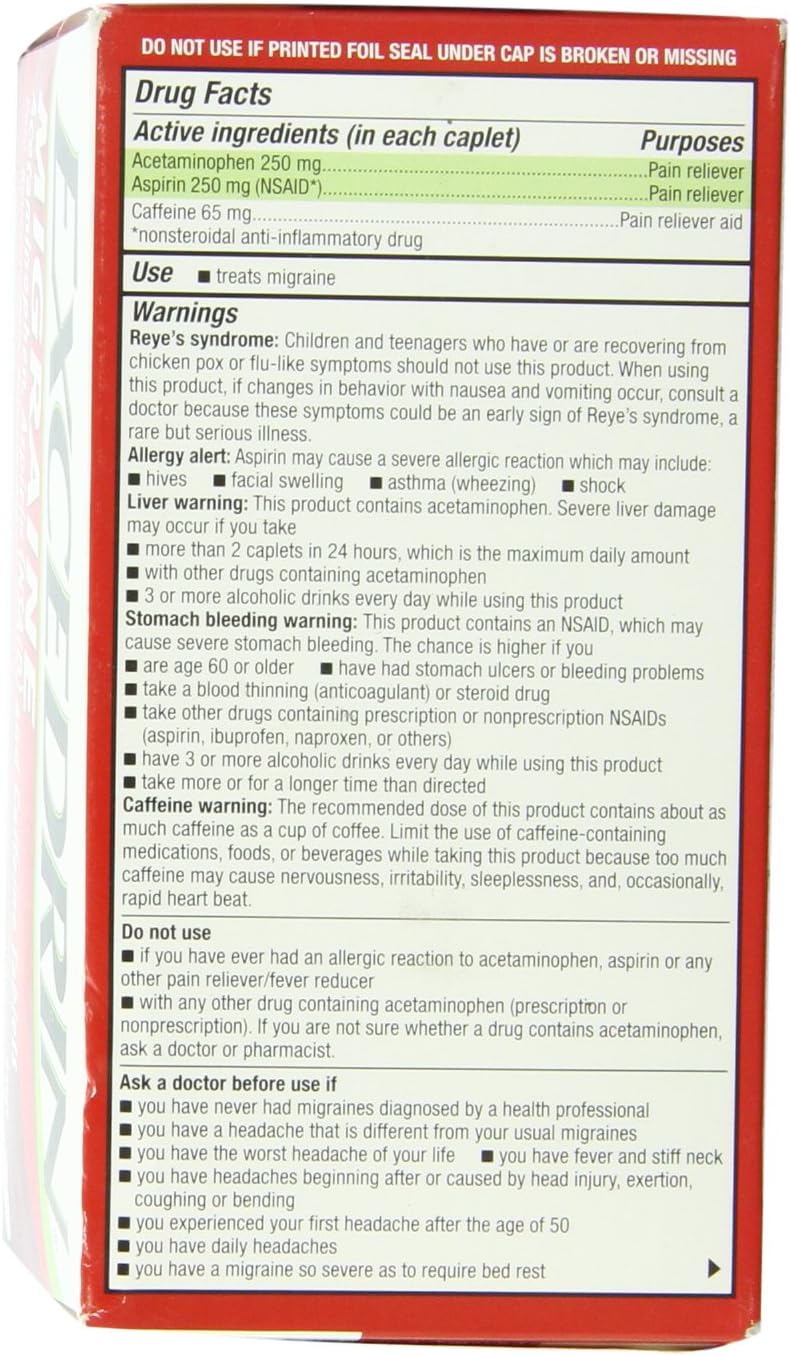
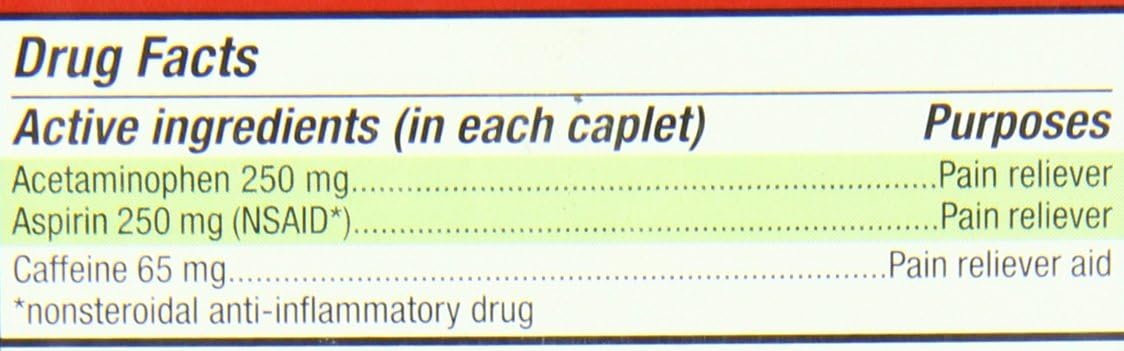
A well-known non-steroidal anti-inflammatory that has been used for more than a century, aspirin works is by blocking the body’s production of prostaglandins in the peripheral nervous system. Aspirin helps to prevent the transmission of pain signals to the brain by stopping the production of prostaglandins. Acetaminophen, like aspirin, also appears to inhibits enzymes in the body that produce pain-causing prostaglandins. However, while aspirin inhibits prostaglandins in the peripheral nervous system, acetaminophen appears to focus its pain-fighting power in the central nervous system. This allows you to tolerate more pain, therefore providing pain relief. Caffeine has been shown to increase the potency of aspirin and acetaminophen—the two pain relievers in Excedrin Migraine — by up to 40 percent. This means less acetaminophen and aspirin is needed to relieve your migraine pain when combined with caffeine. Excedrin Migraine contains acetaminophen, aspirin, and Therapeutically Active Caffeine.A noticeable reduction in pain within 30 minutesMajor improvements in their ability to take part in normal activities300 coated caplets DO NOT EXCEED RECCOMENDED DOSAGE WITHOUT CONSULTATION WITH YOUR DOCTORMigraine HeadacheAspirin, Acetaminophen, Caffeine, with inactive ingredients, see photos, and or packaging for details.ADULTS: TAKE TWO CAPLETS WITH A GLASS OF WATER.Not for someone under 18 years of age: ASK A DOCTOR. See details below, as well as Box warnings on photos 1,2,3,4. What is the difference between Excedrin® Migraine and Excedrin® Extra Strength? The product approved for migraine headache is the same Excedrin® Extra Strength formula that has been on the market for more than 30 years. The FDA required that new labeling be created to address important patient information, instructions, and warnings for use in treating migraine headache pain. Is it true that the majority of migraine headache sufferers do not seek treatment from physicians? Yes. Studies have shown that the majority of migraine patients do not currently seek professional treatment. Where can patients get more information on managing migraine headache pain? There are many resources available, including the National Headache Foundation (1-800-843-2256), The American Headache Society (1-800-255-ACHE).Statements regarding dietary supplements have not been evaluated by the FDA and are not intended to diagnose, treat, cure, or prevent any disease or health condition.
Product Overview
We Recommend